The True Vegas Count: What It Actually Costs to Run the Numbers
Strip away the neon and the comped cocktails, and the true cost of a Vegas count comes down to one brutal metric: the house edge multiplied by your total handle, adjusted for every hidden variable the floor managers pray you never calculate. Most players obsess over the sticker price of a bet. Professionals obsess over the true cost per hour of exposure. That gap is where fortunes are quietly drained.
Breaking Down the Base Math
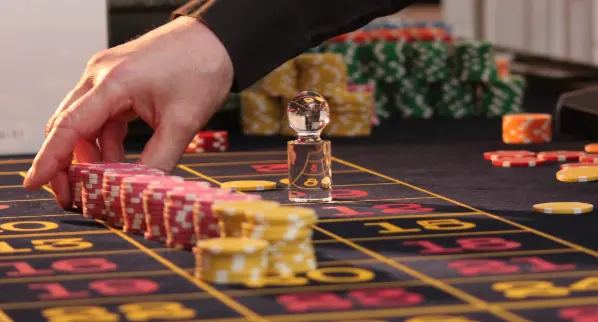
Take a standard double-zero roulette wheel. The advertised house edge sits at 5.26%. But the true cost of your session is not that number in isolation. It is that number compounded across every spin, every rebuy, and every tilt-driven escalation. A $25 outside bet running 60 spins per hour bleeds roughly $78.90 in theoretical loss per hour. Run that for four hours and you have donated over $315 to the property without ever touching a high-limit table. 😤
Now layer in the real killers: side bets, progressive jackpot rake, and 6:5 blackjack payouts. A 6:5 game pushes the house edge on a basic-strategy player from 0.5% to nearly 2%. That single rule change quadruples your true cost. Vegas does not need to cheat you. It just needs to adjust the payout structure and let arithmetic do the violence.

The Slot Machine Cost Illusion
Slots are where the true count gets ugly. A machine advertising 92% return holds 8% of every dollar cycled. If you spin $1,200 through a $1 denomination machine in an hour, your expected loss is $96. But that is the clean version. Real-world volatility, server-based RNG delays, and variable denomination traps can push the actual bleed rate well above the theoretical floor. The true Vegas count for slots is not the RTP printed on the glass. It is the RTP minus the psychological manipulation of near-misses and bonus teases designed to extend your session length.
Hardware audits of modern slot cabinets show that bonus frequency tuning can extend average play time by 22% to 34%. That is not randomness. That is engineered cost inflation. 🎰
Table Game Tipping and Time Cost
Nobody factors the tip rate into the true cost. A $5 toke per hand at 60 hands per hour adds $300 to your hourly expense. Combine that with the base house edge and you are looking at a blended cost that rivals a mortgage payment. The casino cost per hour for a mid-stakes player easily exceeds $400 when you account for tips, drinks, and the opportunity cost of capital sitting in a chip tray instead of an index fund.
Sharp players track every dollar. They know the true count is not a card-counting myth. It is a spreadsheet reality that most tourists never open.
The Comps Offset Myth
Casinos advertise comps as a rebate on your true cost. They are not. A $50 dinner comp on a $3,000 theoretical loss is a 1.67% return. You would get better value from a savings account. The comp system is a retention mechanism, not a refund. Treat every offer as a marketing expense the property has already priced into your expected loss.
The only true offset is discipline. Set a loss limit, track your handle, and calculate your real cost per hour before you sit down. The math does not care about your feelings, your lucky shirt, or the cocktail waitress’s smile. 🧮